


The DiaCeph Story: Memoir of one Man's Survival and Innovation after a 1992 Brain Injury.
Author Stephen Dolle talks about 20 difficult years following a 1992 automobile accident and placement of a shunt for hydrocephalus, and how he came to direct his own surgeries.
Photo: Stephen Dolle in front of the capital in Washington, D.C., attending the 1999 International Food & Drug Administration STAMP Conference he helped to create, but wasn't chosen for the panel.
 The "DiaCeph Story" spans 20 years,
requiring an ordinary man to overcome extraordinary odds, personal trials, and
tribulations unimaginable in today's times. But, Stephen Dolle turned tragedy into triumph. Lemons into lemonade. His
story follows a 1992 auto accident and brain injury, mysterious complications while in the care of a major university medical center
(which reduced him to
the functional level of a 12 year-old), his battles to regain his life, and the extraordinary new skills
he developed along the way - that intrigue experts across multiple disciplines.
The "DiaCeph Story" spans 20 years,
requiring an ordinary man to overcome extraordinary odds, personal trials, and
tribulations unimaginable in today's times. But, Stephen Dolle turned tragedy into triumph. Lemons into lemonade. His
story follows a 1992 auto accident and brain injury, mysterious complications while in the care of a major university medical center
(which reduced him to
the functional level of a 12 year-old), his battles to regain his life, and the extraordinary new skills
he developed along the way - that intrigue experts across multiple disciplines.
Stephen reveals in intricate detail how, through a series of CNS shunt surgeries, his health deteriorated and left him with a "disability sentence." Through his resourcefulness, determination, and inventiveness, he would make extraordinary discoveries in this area of medicine and public policy. He became an expert and inventor of U.S. medical technology, an expert in U.S. Food & Drug Administration (FDA) policy, in evaluating medical studies, matters of law, artificial intelligence (AI), and rhythm and hand percussion. He presented his findings of a four-year investigation into FDA and complex CNS shunt failures in a 1996 FDA Petition, and handed the industry a road map of recommendations and technology for the 21st Century.
Within a couple years of his injury, he was reviewing complicated scientific, regulatory, and legal papers and books. He could only read a few pages at a time, and had to use highlighters and Post-It notes all over the papers. Every day he watched political debates and baseball games on television, over and over, to re-teach him language, comprehension, and knowledge of things and events. Each provided the repetition he needed to strength his memory skills. And within a few years, he began to sound like a TV or radio commentator. If there were a word he did not know, he would look it up.
He had to collect, review, and compile hundreds of pages of neurosurgery studies, federal codes, and personal notes in preparing this 15-page FDA Petition. While reviewing studies on hydrocephalus and CNS shunts, he observed a re-occurring serious discussion in the unavailability of diagnostic tests to document shunt malfunction. It resulted in misdiagnosed shunt failures and problems, significant quality of life issues, raised the costs of medical treatment, and led to higher rates of disability.
During this time, Stephen
also began to speak to John Holter, credited for pioneering silicone shunts
to save his own son's life in the 1950s, and learned how he and Mr. Holter had
very similar paths. CNS shunt device issues
are measured in terms of "outcomes assessment," so Stephen notified the FDA of  data he had on poor outcomes and of his intent to design a new CNS shunt
monitoring system, which he would term the DiaCeph
Test. It would capture critical shunt data on a user without any attachments or invasive procedures.
data he had on poor outcomes and of his intent to design a new CNS shunt
monitoring system, which he would term the DiaCeph
Test. It would capture critical shunt data on a user without any attachments or invasive procedures.
Stephen's petition changed the way the FDA viewed the role of the public as patient-advocates. His efforts caused the FDA to hold a special International STAMP Conference in Washington, D.C. in 1999 to address many of his findings and conclusions. Political meddling, though, very oddly prevented him from presenting his DiaCeph Test and views at the STAMP Conference. He authored a special Paper on FDA Recommendations, and distributed these at the conference. In 1999, he was termed both a pioneer and hero, and written up in the Orange County Business Journal as "The Accidental Inventor." Later that year, he would initiate a series of inquiries with the Commissioner of the FDA - that would reveal a bombshell of corruption.
Few in the neurosciences field knew of Stephen's pre-injury career that spanned more than 15 years in science and medical imaging, founding and leading Certified Nuclear Imaging for 10 years, fundraising work, and work in entertainment. He estimates he worked-up over 15,000 patients and produced hundreds of discoveries in his pre-injury medical career. Other accomplishments included rescuing a scuba diver in Hawaii in 1984, a stranger sure to die without his intervention, and 8 to 10 years spent as a youth baseball and soccer coach.
In October 2008, Stephen learned that the swelling in his brain had gone away - after 16 years and 7 brain surgeries. The news came from his 6 month follow-up CT scan post surgical revision to the OSV-2 (Orbis Sigma, Mfr. Integra). In fact, he learned while reviewing his own CT brain scan via a CD he obtained for his home PC several days before he was to see his neurosurgeon.
The image below at far right shows his normal-sized ventricles today. The image at far left (July 1992) was one month after his automobile accident, before he was shunted and told he could die. Stephen's scientific paper, Shunt Selection Model , describes how he was able to bring about this corrective surgery.
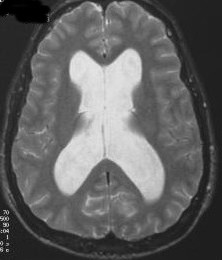
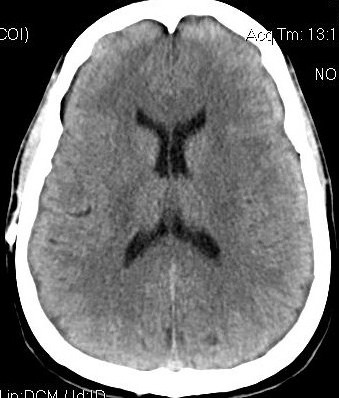
July 1992 Auto Accident Oct 2008 OSV-2 Shunt
Stephen was initially implanted with a Delta valve, but in the following months his brain swelling worsened. He required additional revisions with lower pressure valves, but still did not resolve the hydrocephalus nor large ventricles. But what neither he nor his neurosurgeon, Dr. Donald Becker, at UCLA Medical Center, knew was that the PS Medical Delta anti-siphon shunt located near the top of his head, was actually what was causing his poor outcome. It was in mid-1996 and four years after he was first shunted, and a couple since then in reviewing published papers and Food & Drug Administration (FDA) documents on CNS shunts & hydrocephalus, and he came across a new study by Dr. Higashi et. al. and his neurosurgical group in Japan, published in the Journal of Neurosurgery, entitled "Risks in using Anti-Siphon Devices." Dr. Higashi and his colleagues reviewed 20 years of published studies on anti-siphon devices manufactured by PS Medical and Heyer-Schulte, and found that the company's scientists used flawed test methods to reach conclusions about the uses and benefits of anti-siphon devices. Higashi termed these malfunctions "functional obstructions," as they were related to upright posture or scalp pressure over the body of the valve. His group speculated it was causing thousands of unnecessary shunt operations each year. But there was one problem, it primarily occurred when the patient was upright. And it was not possible to do a brain scan with the patient upright. When supine CT and MRI brain scanning were performed on patients with anti-siphon devices suspected of functional obstructions, the results came back "normal." What Higashi & his team suggested, was a new type of shunt test! When these CT and MRI results came back as "normal," and scientists knew there WAS a shunt problem, they called the result a "false negative," meaning, there is a problem with the patient and shunt, but testing reports it as "normal." So Higashi and his team called for a new type of shunt test!
His complaints and poor outcome seemed remarkably similar to what Higashi and his team reported in their studies. But what he didn't have, was PROOF of this for corrective surgery. He had the lowest pressure Delta shunt and couldn't convince a neurosurgeon to re-operate as they couldn't find anything wrong issue with his shunt. Around this time, he had obtained some medical studies on hydrocephalus from the Hydrocephalus Association. But there was no Internet, so the only way to get studies was to spend a couple days at UCI or UCLA's medical library, which he did do. But it was not easy, as he only had 2-3 hours each day where he felt well enough to do executive level tasks. Then around this time, he spoke to the Washington D. C, group Public Citizen, about the findings on anti-siphon shunts in the Higashi et. al. study. Public Citizen then convinced him to petition the Food & Drug Administration to require PS Medical & Heyer-Schulte to amend their literature, warnings, and user instructions. But, petitioning the FDA was no small task. He needed tons more supporting studies. And to get these, he had to painstakingly go thru the relevant studies and identify the referenced studies, and pay a librarian consultant to get studies. Once received, he had to review each one and insert the relevant "citations" that supported his contention of a safety problem with these anti-siphon shunts. He had to learn supporting regulatory codes, determine which ones bad been breached, and tell the FDA specifically what they needed to do to require PS Medical & Heyer-Schulte to amend their product labeling. It was a big undertaking. Took me 6-12 months. In November 1996, He filed this Petition to the Food and Drug Administration on problems with Anti-Siphon Devices.
With his strong math and nuclear medicine imaging background, proceeded to devise a new test system to determine whether in fact he was suffering "functional obstructions" with his shunt, that no neurosurgeon would operate on! That was his only motivation!
It took him more than a year, but by mid-1997, he had devised a formula and algorithms to analyze a patient's hydrocephalus complaints in different postures, under different conditions, and at different time of the day. Once he completed the design, he had to use himself as a "guinea pig" for another six months to prove that it worked! Once this was done, he contacted a rep he knew at Cordis in Florida to see if they might be interested in his new test method. But the answer was not favorable. So a friend convinced him to patent his test method. He needed to name it! So took to a dictionary and looked up various terms on testing, the brain, and hydrocephalus, and settled on DiaCeph, where "dia" means to diagnose, and "ceph" means of the brain.
DiaCeph then became one of the earliest mobile health apps. Stephen then founded DiaCeph, Inc. to develop the DiaCeph Test and other mobile apps and cognitive solutions - and this was before the first smart phones. He could never get finding to develop it as a stand-alone PDA app. But today is working on making it available as a mobile phone app, that would allow it to be used world-wide. His www.DiaCeph.com web address currently points to this site. But, if and when DiaCeph is available as a mobile app, DiaCeph.com would be the main web site.
Beginning in 1996, Stephen began answering patient questions on the Hyceph-L list serv in Canada, and then by 2002, inquiries by email and telephone calls, and did not charge for any of this until about 2009.
Stephen has accrued considerable qualifications and expertise despite not having gone back to school for a masters or doctorate degree. In many instances, he is often more knowledgeable on shunts and hydrocephalus outcomes than the treating neurosurgeon of patients he consults for. He says most of his consults have had positive outcomes. But there were two neurosurgeons he recalls who refused to read his consult reports: a Dr. Michael Williams at Johns Hopkins Medical Center, and a Dr. Denis Sirhan at Montreal Neurological Institute.
It is worth mentioning that two of the biggest contributors to hydrocephalus care in the last 60 years were not physicians. This includes John Holter, who was one of the pioneering shunt designers and the parent of a child born with hydrocephalus, Godfrey Hounsfield, the engineer who with funding from EMI Records (EMI Labs), invented the CT scanner and received a Nobel prize for it.
Stephen finally did get his problem Delta valve replaced in 1998, but with the earlier OSV-I that was being discontinued, and it only provided a minimal level of improvement. At that time, the FDA held up the newer OSV-II. So it wasn't until 2008, that he received the OSV-II shunt that enabled all his ventricular enlargement to go away.
Discussions and information regarding the DiaCeph Story should be sent to hydro[at]diaceph[dot]com.