

This section features examples of, and discussions, on the topic of innovation and new products development. First, where does innovation really come from? Historically, it comes from creativity and from passion, out of times of hardship, a personal passion to invent, from needs created by war, or out of tremendous personal need. Who funds innovation and new inventions? Well, a multitude of sources, from federal and state government grants, venture capitalists, angel or private investors, partnering firms in related fields, and also through philanthropy. Philanthropy and private endowments make up a sizable portion of seed money in the U.S. and West.
The links at left, and hyperlinks below (which open in a separate window), present key examples of innovation and inventiveness. Stephen Dolle enjoys speaking about innovation, featuring stories such as the invention of the CT scanner made possible with funding from "The Beatles" rock and roll record label, EMI Records, to how modern day CRT television and computer screens originated.
The Neurosciences:
 As part of Orange County's Innovation Month ( October 2007),
Stephen Dolle, aka "MacGyver," launched new keynote speaking
and workshops entitled, Drum
Communications and Team Training (DCTT). DCTT focuses on innovative new
methods of enhancing inter-personal communications, team communications and
syncopation, sharpening the mind, health and wellness, and physical coordination
through the use of drums and rhythm techniques. As a sub-specialty, Stephen also
puts on health
and wellness drumming events. Stephen can be heard here in a live
podcast interview on Love2Drum speaking on rhythm and the brain. Earlier in
2002, he led a study on sensory
integration and the affects of audible noise pattern syncopation on the
brain. He studied the
As part of Orange County's Innovation Month ( October 2007),
Stephen Dolle, aka "MacGyver," launched new keynote speaking
and workshops entitled, Drum
Communications and Team Training (DCTT). DCTT focuses on innovative new
methods of enhancing inter-personal communications, team communications and
syncopation, sharpening the mind, health and wellness, and physical coordination
through the use of drums and rhythm techniques. As a sub-specialty, Stephen also
puts on health
and wellness drumming events. Stephen can be heard here in a live
podcast interview on Love2Drum speaking on rhythm and the brain. Earlier in
2002, he led a study on sensory
integration and the affects of audible noise pattern syncopation on the
brain. He studied the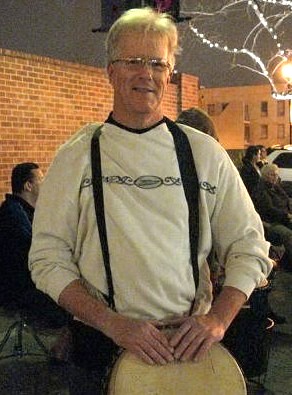 ill-effects of 50 audible beat patterns, with varying
tempo and volumes, on a group having sensory integration disorders. His study
revealed a critical relationship between sound, room noise, and noise pollution
on cognitive and behavioral deterioration in persons with sensory integration
disorders like PTSD, hydrocephalus, autism, and ADHD. From this research, he has
been able to formulate specific types of "health rhythms" or beat
patterns to stimulate positive responses in the human body.
ill-effects of 50 audible beat patterns, with varying
tempo and volumes, on a group having sensory integration disorders. His study
revealed a critical relationship between sound, room noise, and noise pollution
on cognitive and behavioral deterioration in persons with sensory integration
disorders like PTSD, hydrocephalus, autism, and ADHD. From this research, he has
been able to formulate specific types of "health rhythms" or beat
patterns to stimulate positive responses in the human body.
Stephen Dolle's patented DiaCeph
Device for CNS shunt
monitoring has been described as innovative and pioneering. The photo of Dolle
below is from 1997, after he completed his design for the DiaCeph Test and used
it to successfully direct his surgery to implant the first Orbis Sigma shunt at Los
Angeles Children's Hospital. He had been implanted with a controversial
Medtronic (Delta) shunt and had petitioned the Food & Drug
Administration in 1996 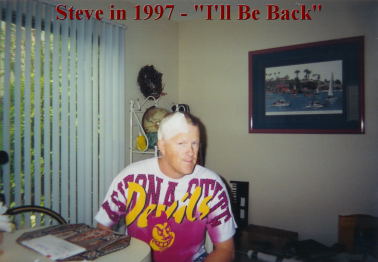 over its safety and performance issues. He had been living with its
ill affects for five years. In fact, this Delta shunt became the impetus for his developing
the DiaCeph Test. Left,, Dolle depicts the image of what a pioneer and innovator
should look like! See also the DiaCeph
Story. The DiaCeph Test is categorized as
artificial intelligence (AI). Its design remains state of the art in 2008. AI
technology in the future will help manage chronic illness,
enhance intellectual skills, and be used to detect early
warning signs of illness and disease. AI will also be able to interact with sub-conscious
and super-conscious thought, and process this information into useful data.
In the future, AI devices will help in everyday tasks, aid seniors and others with
neuro-cognitive deficits, enhance mental performance in athletics, and enhance skills
and training of firefighters, police,
and military personnel.
over its safety and performance issues. He had been living with its
ill affects for five years. In fact, this Delta shunt became the impetus for his developing
the DiaCeph Test. Left,, Dolle depicts the image of what a pioneer and innovator
should look like! See also the DiaCeph
Story. The DiaCeph Test is categorized as
artificial intelligence (AI). Its design remains state of the art in 2008. AI
technology in the future will help manage chronic illness,
enhance intellectual skills, and be used to detect early
warning signs of illness and disease. AI will also be able to interact with sub-conscious
and super-conscious thought, and process this information into useful data.
In the future, AI devices will help in everyday tasks, aid seniors and others with
neuro-cognitive deficits, enhance mental performance in athletics, and enhance skills
and training of firefighters, police,
and military personnel.
Technology:
 In past years, Bell Labs and research facilities of fortune 100 companies
were responsible for many technologies of the 1960s,
70s, and 80s. But, in recent years, many of the labs have been closed, and a new era of infrastructure
research is ushering in. In 2004, a group of
local business executives and leaders from the
University of California at Irvine formed a new outreach organization
known as, "OCTANe," to
nurture new biotech and high technology start-up companies like DiaCeph,
Inc. in Orange County. OCTANe was not in existence from 1999 and 2003, the
critical years for the upstart DiaCeph,
Inc. In fact, the University of California at Irvine's Office of Technology
Alliance at that time still had outdated rules and such that prohibited
university staff from writing NIH grants for projects like DiaCeph that were to
be undertaken at the university.
In past years, Bell Labs and research facilities of fortune 100 companies
were responsible for many technologies of the 1960s,
70s, and 80s. But, in recent years, many of the labs have been closed, and a new era of infrastructure
research is ushering in. In 2004, a group of
local business executives and leaders from the
University of California at Irvine formed a new outreach organization
known as, "OCTANe," to
nurture new biotech and high technology start-up companies like DiaCeph,
Inc. in Orange County. OCTANe was not in existence from 1999 and 2003, the
critical years for the upstart DiaCeph,
Inc. In fact, the University of California at Irvine's Office of Technology
Alliance at that time still had outdated rules and such that prohibited
university staff from writing NIH grants for projects like DiaCeph that were to
be undertaken at the university.
The origin of the CT and MRI scanner is perhaps more
compelling. In 1968, EMI Records and British engineer, Godfrey
Hounsfield,
embarked on a mission to adapt technology originally intended for scanning airport luggage to be
capable of imaging a human brain. At that time only limited and rather archaic means of brain imaging were
possible. When the EMI company introduced the EMI (CAT) brain scanner around 1971, it
really caught the medical field by storm. It was without a doubt the most critical advancement
in the treatment of neurological disorders of the 20th Century. A similar display
architecture is used today in MRI and PET imaging. This technology later extended the life of
Beatles' band member, George Harrison. We acknowledge this innovation by EMI and Godfrey
Hounsfield,
who was later
awarded a Nobel prize. See this EMI
Scanner Story on the web.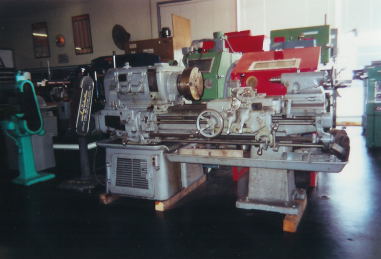
In a retrospective look at technology and machine tool innovation of the late 19th Century, a yet unpublished book, William Lodge: A 19th Century Entrepreneur, by the late W. L. Dolle, Jr., examines the life and career of William Lodge, who led many key advances in machine tool building in the later 19th Century. Lodge helped the town of Cincinnati, Ohio, earn the title, "machine tool capital of the world." In a career spanning 40 years, he founded three companies, introduced the concept of mass production to the building of machine tools, and patented over 10 machine tooling inventions. In this new book, Lodge is presented as an "entrepreneur," and the author makes key comparisons of the machine tool industry at the end of the 19th Century, to that of Silicone Valley and the high tech sector of the late 20th Century.
W. L. Dolle writes that Lodge was admired not only for his skills in innovating, but also for his steadfast and trusted leadership. Many employees followed him to successive companies. The author cites the limited business infrastructure and resources not available to companies during those years. The Cincinnati Museum Center's Machine Tool Exhibit features an exhibit of the industry during that era. The photo at right is of a 1940s era Lodge & Shipley lathe used by the U.S. military in World War II. A PDF file containing this yet to be published book is provided (free of charge) on this web site for downloading and reading in PDF format. Copyright rules do NOT allow unauthorized printing or hosting of this book on other web sites. William Lodge is the great great grandfather to Stephen Dolle, the founder of this web site.
A good example of a present era project in science and innovation is the Lawrence Berkeley National Laboratory in California. The facility is a cooperative effort between the U.S. Department of Energy and the University of California at Berkeley. They conduct advanced multi-disciplinary research in science and technology, with an emphasis in energy. It is an excellent example of the cooperative effort between the public and private sectors, and it appears to conduct a sizable amount of study in artificial intelligence technologies. It is one of perhaps 50 or so like it in the country. Visit the site from here at Lawrence Berkeley National Laboratory.
A question that has confounded scientists for many years is whether
"Spiritual sensation" is actually a "6th Sense." Books, movies, and Spiritual writings indicate its existence,
yet science has yet to formally confirm it as a sensory function, perhaps as it
tends to occur in certain individuals, and to
varying degrees. Highly evolved reasoning skills, backed by studies in
"quantum mechanics," form the foundation
for extraordinary skills made possible through compensatory brain mechanisms,
which we cover
writings indicate its existence,
yet science has yet to formally confirm it as a sensory function, perhaps as it
tends to occur in certain individuals, and to
varying degrees. Highly evolved reasoning skills, backed by studies in
"quantum mechanics," form the foundation
for extraordinary skills made possible through compensatory brain mechanisms,
which we cover  under AI Research.
These abilities are fundamental to the creative and intuitive abilities of
leading
artists, scientists, businessmen, religious, and political leaders. This was
touched upon in the 2004 movie, "What the Bleep do We Know."
under AI Research.
These abilities are fundamental to the creative and intuitive abilities of
leading
artists, scientists, businessmen, religious, and political leaders. This was
touched upon in the 2004 movie, "What the Bleep do We Know."
A more recent area in Innovation is in "hybrid powered" automobiles, with rapidly expanding developments in bio-fuels, and eventually, in hydrogen-powered engines. Increasing fuel costs and a greater demand for more eco-friendly vehicles is creating new opportunities in transportation. There is likely to be a great deal more political wrangling and attention to energy policy. In the end, this research will result in spin-off applications of the technology into other products and fields.
On the fun side of things, a sling made of canvas and cord and very similar to that which David used to kill Goliath in Old Testament times, can be used to throw a baseball further and faster than the same human arm. It is based on the law of "centripetal acceleration," in which an object in motion at a further distance from its center or fulcrum point moves at a faster rate of speed than objects closer to its center. In other words, it explains why tall baseball pitchers can more easily throw faster - as their arc and length of arm moves the ball faster. The following Christian Sling Archeology Information describes how it works in more detail.
As an experiment, Stephen Dolle fabricated a sling to through a baseball harder than he would ordinarily be capable of with an aging arm. As a former pitcher, and with a son pitching in college, he could still use a sling learned during his youth. His demonstration of a sling to throw a baseball is a thousands year old example of Innovation. It does require a high level of skill and practice. But a properly made sling, can hurl a baseball faster and further than the human arm alone. See more at discussion of Fun Science: Sling Hurls Baseball.
These and other examples of Innovation make for great speaking topics at industry, corporate, and fundraising events. Mr. Stephen Dolle is a proven "innovator." For more information on our Communications services, Contact Us via email or on our web form.